

A trade-type label is useful only if you know what it means in your records. An entry marked Intraday may reflect a deliberate classification, or simply the default selected when the form was opened. Before comparing styles, check how the labels were assigned.
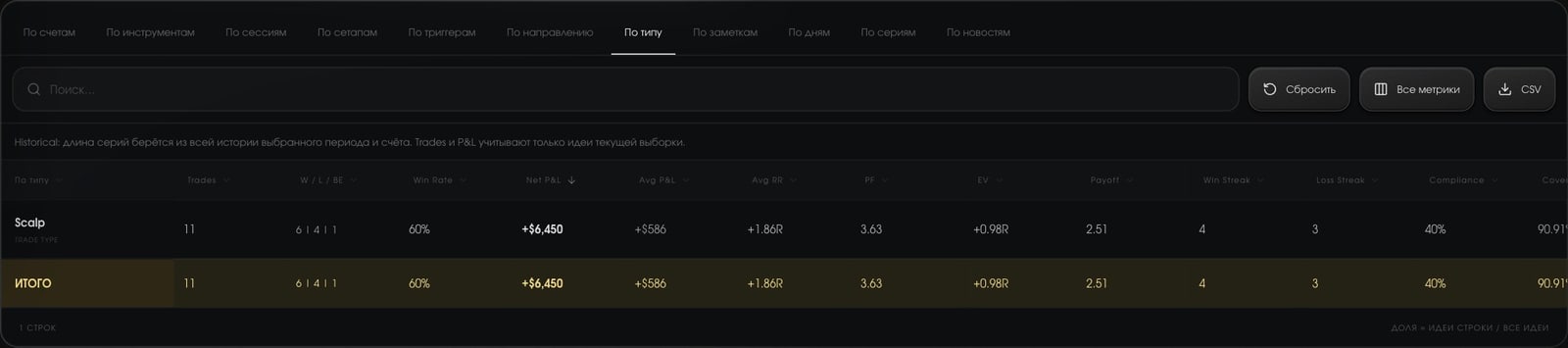
Santrade provides Scalp, Intraday, Swing · intraweek and Swing · intramonth. You define the practical boundaries for your own journal. The labels organize the history; they do not tell you which style is suitable or guarantee that one produces better results.
Write working definitions for the types
Describe what makes a record belong to each type you use. You may distinguish them through your intended holding context and management approach. Keep the definitions in a place you can consult during recording, and explain the date when you change them.
A type is not the same as a setup. A model identifies the decision framework, while a type classifies the style represented in the entry. The guide to setups and entry reasons helps keep the model, individual conditions and broader classification separate.
Use the names consistently rather than relabelling profitable records into the style you now prefer. If an old entry cannot be classified from the available information, retain that limitation.
Check defaults before trusting the history
New manual records begin with Intraday selected. That default is not evidence that every saved Intraday entry was deliberately reviewed. Inspect a few records you know well and check whether the label agrees with their documented context.
An import does not establish your personal trading style automatically from holding duration. Review the type where that classification matters. A report can establish executions while leaving your intended framework undocumented.
Deep Analytics includes a type breakdown, a type filter and a no-type option. The workflow for finding missing details can help with gaps, but defaulted labels need their own source check because an existing value can still be uncertain.
Keep comparison coverage explicit
Select the dates and accounts, then inspect the counts for each type. A style represented mainly in one short period or one account has different coverage from a style used throughout the history. Retain those differences beside the results.
Include the relevant profits, losses and BE. A view containing only winning Swing trades cannot describe the full recorded Swing history. Also check how much of the unclassified or defaulted area you could not verify.
If definitions changed during the period, explain the boundary. Combining two meanings under one label may make a large-looking group less coherent than its count suggests. You can choose a narrower clearly defined sample, provided the change is stated rather than hidden.
Read outcome size and risk together
Compare monetary results with known R values and their input coverage. A style with larger risk amounts can contribute more dollars without having a larger normalized result. Missing risk can leave Expected Value unavailable while money totals remain known.
The money-and-R explanation keeps those questions separate. Average RR is unsigned and excludes BE; it should not be read as an average signed profit for the style.
Inspect the instrument, setup and session mix too. A difference between types can accompany a difference in those groups. The style label alone does not isolate the source of an outcome or demonstrate that a different holding approach would have changed the same trade.
Open linked ideas and actual decisions
Strategy analysis represents a linked multi-account idea once. Its trade type comes from the represented idea, with attributes that depend on its completed executions. Do not assume that different type labels on account members become independent style observations.
Expand the records if the labels disagree or the group is only partly closed. Main-record group editing can share type across executions, so verify that the classification describes the common context before using that editing path.
Then read examples on both monetary sides. Check what the plan said about management and what was actually recorded. A finished chart may look like a longer-term opportunity without showing that the original position was planned that way.
Save a finding about your own classification
A useful review states the definitions, accounts, dates, counts and unresolved labels. Describe the measure that differed and the source entries that need another look. Keep an observation about recorded styles separate from advice about which one to trade next.
The filter-overfitting check helps when more conditions keep improving the preferred row. Check the next records against your written type definitions.