

A preparation checklist is useful when its items describe actions you can recognize as finished. “Be ready” leaves the decision open. “Open the relevant model and confirm which condition applies” gives you a task you can check and a reason to revisit the source.
Build the list around your own recording procedure. Workspace can store the document and checked state, while you decide what each item means and whether the evidence supports checking it.
Start with observable preparation actions
Choose a small set of actions connected to your own work, including recording and source checks that do not require a market entry. A starting list you can adapt:
- Confirm the account and date used for the session's records.
- Open the model material relevant to the task you are reviewing.
- Identify the condition you need to observe and the evidence to save.
- Decide where the timely note or image will belong.
Rewrite the items in language you can apply. If a task contains several separate actions, split it so that a checkmark has a clear meaning. Keep any uncertain requirement open instead of using one tick to stand for an entire undefined routine.
Create a readable Workspace document
Use a heading to name the procedure, then add checklist items in the material editor. A short paragraph can explain the scope and where to find supporting model documents. The editor supports checklists alongside text and other document blocks.
Put a short source name beside a task when it depends on another document. A check that says only “review the model” can remain ambiguous if several model versions exist.
The material is your own procedure, not a ready-made trading system or a test of market conditions. Completing an item records that you marked it complete; the app does not independently confirm that the original action happened or allow broker orders only afterward.
A trading playbook can hold the model material referenced by the list. Keep the preparation procedure short enough to locate without opening a large collection of unrelated examples.
Keep routine and trading rules distinguishable
An item such as opening the correct document is an organizational step. A requirement that must be met before entry is part of your trading rule. State the difference where it matters to later assessment.
A sample note could say, “This checklist records document preparation. The model document defines the entry condition.” Keep the two roles explicit when checking whether the trade's requirements were met.
If you later assess compliance, use the known rule and actual action in the trade record. A tick in a general document is useful context, but it is not an automatic Rule Compliance assessment attached to every entry from that session.
Check saving and the next session's state
Workspace provides automatic and manual saving. Wait for the saved state, then reopen the material to verify that the intended checklist and checks remain. If a save fails, resolve it before relying on another device's view.
Checked state persists in the current document. It does not reset on a morning schedule or become a new daily checklist automatically. Decide how you will handle the next session: reset the existing list deliberately or create a clearly dated material for the new session.
If the earlier state matters to a review, preserve it in your own record before replacing it. A current editable checklist is not an automatic archive of every past session. A short date label and explanation can keep successive uses understandable.
Try the list on one journal task
Use the procedure while checking one record or preparing one plan. Can you tell which account and document each item refers to? Does the wording identify what evidence is needed? An item that repeatedly creates an interpretation problem may need a clearer definition.
The journal habit guide can help choose a manageable repeatable action. The aim is a procedure you can actually complete and verify, including on a session devoted to review rather than a new position.
The immediate after-close routine is a separate task. Keeping it separate prevents the preparation list from expanding into every possible step of entry, management, import and daily analysis.
Revise the procedure with a visible reason
After trying the list, note which item was unclear or failed to produce the information you needed. Change that wording for the next use, while preserving the relevant earlier context if it was used to assess past actions.
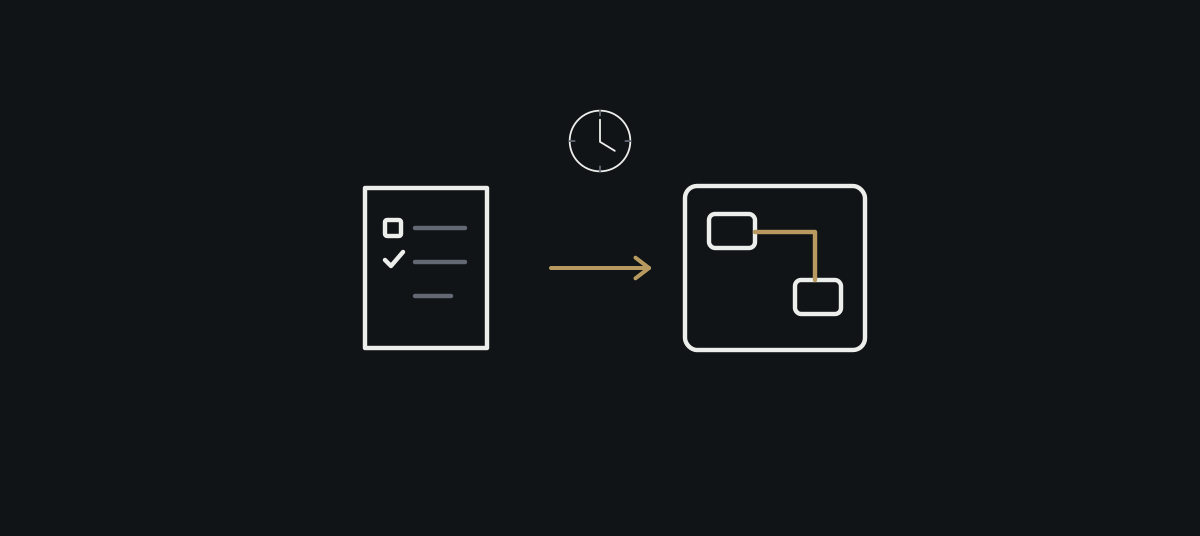
Use a board for a branching if-then plan and a checklist for a simple sequence of your own actions. Neither monitors the market or guarantees discipline. Before the next session, check which saved state you will reuse and which items need resetting.