

Choose the week before reviewing it. A current-week selection partway through the week is a different sample from a completed earlier week. Write the exact dates and accounts, then choose one question that the underlying records can answer.
Bring the numbers together with the decisions behind them. Save the finding the records support, including uncertainty, without requiring every summary change to produce a new trading rule.

Fix the boundaries and recording unit
Use explicit dates when the period picker does not describe the week you mean. Retain the account scope and check it again when moving between Journal, Deep Analytics and Calendar. Their selections and inclusion rules are not automatically identical.
Decide whether the question concerns distinct ideas or account executions. A linked idea can have several members and partial cash events without becoming several independent decisions. Plans and open positions also belong to a different sample from completed financial outcomes.
Avoid comparing an incomplete current week with a full prior week as if their coverage were equal. If you deliberately make that comparison, state the unequal boundaries and counts rather than treating the difference as a change in conduct.
Check what the history contains
Inspect source completeness, closed counts, labels and missing R inputs. A report can supply execution facts while leaving plans, entry reasons and personal observations incomplete. That distinction can limit what the week can answer.
Read actual P&L separately from transfers and account balance changes. A higher closing balance may include funding. A known cash result does not guarantee that every risk-based metric can be calculated from the available records.
A specific statistics question helps decide which checks matter. A review about management documentation needs different evidence from a comparison of two monetary totals.
Pick one repeatable question
For example, “Did entries associated with this model preserve the management condition available before entry?” gives you a standard to apply across the defined week. You can inspect matched records without inventing a different assessment for each outcome.
Use ordinary profits, losses and small results as well as the most memorable case. If a saved condition is missing, retain an unknown case. An empty field does not prove that you acted without a plan, and a completed chart cannot reconstruct an earlier intention.
The daily review can supply useful event notes, but the weekly question should organize them rather than require a full retelling of each day. Group recurring gaps only where the records support a shared definition.
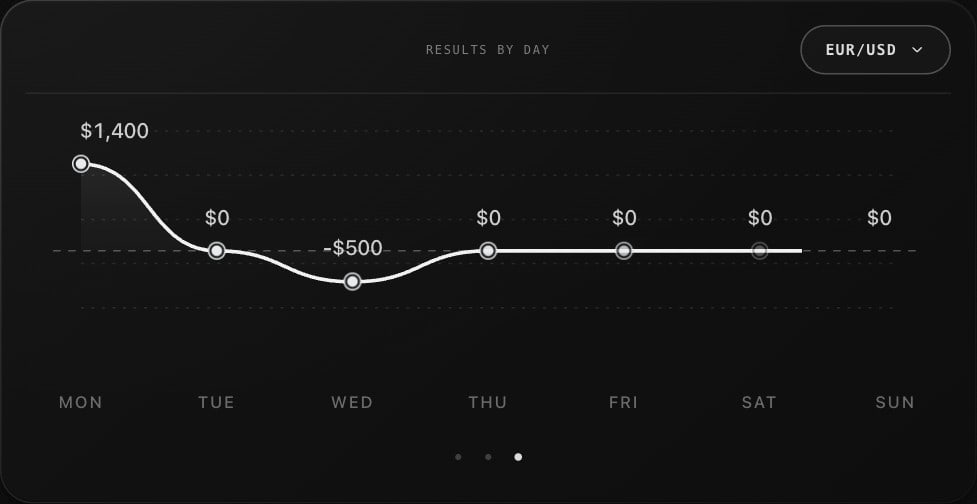
Read measures alongside actual decisions
Check count, money and relevant known risk. Average RR is unsigned, while Expected Value is a signed historical mean requiring a complete included R basis. A change in one value can follow a corrected input rather than a new decision.
For rule assessment, retain Coverage beside Compliance. More complete labelling can change the percentages even when the executions and cash remain unchanged. A week with more documentation is not automatically a week with better trading.
Open the records that contribute most to the finding. Read the earlier condition, action and source evidence. The summary can locate an entry worth inspecting; it does not explain the motive or establish the cause of its result.
Preserve an initial impression without forcing disagreement
If you wrote an impression before opening the table, compare it with the same dates, accounts and unit. The memory-versus-records review allows agreement, a difference or an unresolved claim.
A sample note could say, “The cash total matched my impression. The count did not, because I had treated two account executions as separate ideas. Management evidence remains incomplete for one entry.” That makes the source of the correction visible without a general claim about memory.
Keep later observations marked as later. A conclusion formed now can guide a recording change, but it does not become evidence of what you knew at the start of the week.
Save the finding and one next procedure
Retain the question, dates, accounts, count, supporting examples and gaps. Choose a small next recording action, such as preserving a plan paragraph before editing it or adding a timely explanation at a management change.
If you export evidence, name whether it is Journal source rows or visible Deep Analytics aggregates. They preserve different information; keep the filter and grouping choices with the file.
A monthly review can compare these procedures over longer periods. Keep the week's dates and sources with the finding so you can revisit it. This is your own saved review, without automatic report generation or causal attribution.