

Before reopening a week of trading records, write a short account of how you remember it. Name the dates and account, the result you recall and the decision that stands out. Then compare that statement with the same bounded history.
Check where the records agree with the impression, where they differ and what remains unanswered. The comparison concerns this week's account, without assuming that memory must be wrong or that a summary card explains every decision.

Preserve the impression before checking the table
A sample impression might read, “I remember three SL outcomes and think the final entry was the largest risk.” Each statement names something you can check against the record.
If you already inspected some results, state that context. This is a personal review procedure, not a blind memory experiment. Keep the saved impression when you add the comparison so that the original statement is not silently replaced by the answer.
Save the impression in a Workspace document or another review note. Keep its original wording yourself; Santrade does not automatically archive earlier versions of your recollection.
Match the dates, accounts and unit
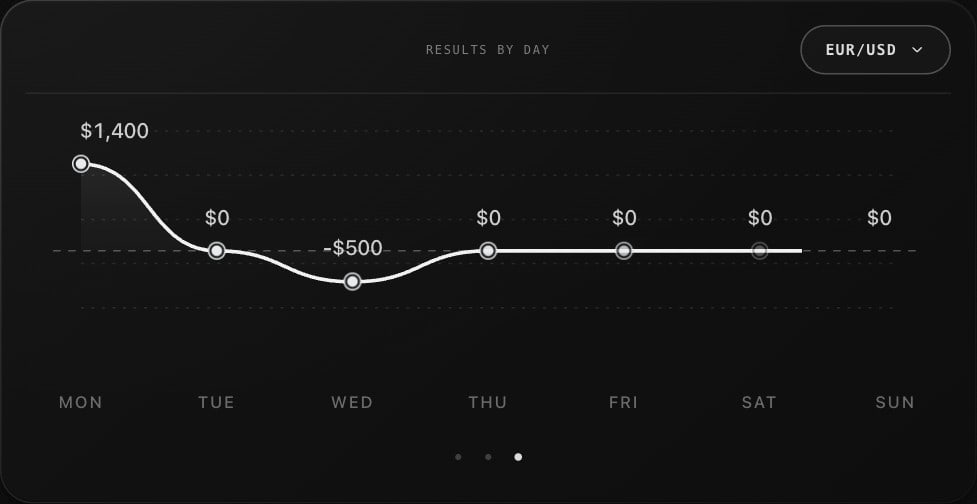
Choose the exact week boundaries and relevant account scope. Read the controls in each view. The Journal, Dashboard and Calendar can have different account or month selections, so a mismatch may explain a numerical difference before memory enters the question.
Distinguish ideas from account executions and partial exits. Several rows associated with one idea do not necessarily represent several separate decisions. Plans and Processing records also differ from completed outcomes in the financial metrics.
If you remember a cash movement, separate trading P&L from deposits or withdrawals. If you remember SL labels, compare those labels rather than substituting every negative monetary value. The statement and the source need to measure the same thing.
Check each claim against its source
Suppose the matching history contains two SL records and one BE, while the saved impression named three SL outcomes. The label count differs. That tells you what to correct in this account of the week; it does not establish a universal reason why the impression formed.
For the claim about largest risk, read the amount, unit and relevant Day Start. A larger entered number can mean dollars in one record and a percentage in another. Confirm the comparable size before deciding whether the impression matched.
Then inspect the comment and images for the remembered decision. A monetary summary can confirm a result while leaving the action or motive unrecorded. Keep those gaps separate from statements the source can resolve.
Describe the kind of difference you found
A difference may come from the scope, label definition, observation unit, an actual mistaken count or incomplete documentation. Agreement is also a valid result. Avoid explaining every mismatch through a general claim about how people remember profits or losses.
A sample comparison note could say, “Same dates and account confirmed. Impression named three SL; source shows two SL and one BE. Risk claim remains open because one base is missing.” Keep the unresolved claim alongside the confirmed count.
The guide to useful trade comments helps when a particular event needs clearer wording. Keep a later recollection identified as later rather than using it to fill a factual gap with certainty.
Keep later information visible as later
A completed chart may make the remembered decision look different now. Separate the plan and image available at the time from annotations added afterward. The hindsight review addresses that particular distinction.
If the timely record agrees with your impression, preserve the agreement. If it supports only part of the account, narrow the conclusion. An uncertain journal entry does not prove that the recollection was wrong, just as a confident recollection does not automatically complete the missing record.
You can take the same check into a daily review, with its period and question stated. Repeating it is a recording procedure, without a promised psychological result.
Save the comparison for the next review
Retain the initial impression, matched scope, source checks and remaining questions. Choose one recording improvement that would address the unresolved claim: a clearer risk unit, an image at the decision or a timely explanation of management.
The broader weekly review can use this account alongside model and conduct questions. It need not begin by retelling the week from memory again. You already have a preserved statement of what matched, what differed and what the available record could not establish.