

When a completed chart makes a trade look obvious, return to the moment the review is about. What condition was saved then? Which image was available, and what action occurred? Information added after the close has a different role from evidence preserved before the decision.
You can organize those sources yourself in Santrade's text and images. The journal does not provide an automatic market replay, restore an earlier live chart or hide future information to make a repeated review blind.
Choose the decision moment
Name the action: entry, a management change or exit. Keep the question narrow enough that you can identify what information would matter. A whole-trade verdict can hide the fact that different stages had different evidence.
The plan-versus-execution review helps establish the earlier requirement. Find the wording that existed before the action. If the plan was overwritten or never saved, state that gap instead of reconstructing it from the completed move.
An idea formed during the review may be useful, but give it a later origin. “Proposed condition for future records” is different from “condition the earlier action was required to follow.”
Read timely evidence first
Open the saved plan and an image captured around the decision before using the final overview to explain it. Inspect what the image actually shows, including the limits of its visible context and annotations. Identify whether each annotation was on the original capture.
The guide to trade-review screenshots covers selecting and captioning those views. A timely image can support a market condition, but it does not record every unspoken thought or prove that all visible information was part of your decision.
Label a later image as later. It can illustrate the review question while leaving the earlier view unknown; it cannot stand in for a capture that was never made.
Separate the stages in your own text
You can label the stages “At the decision,” “After the close” and “During this review” in your description or captions. These are user-written labels, without automatically recovered timestamps.
A sample might read, “At the decision: the saved plan required a new check before changing management. After the close: the completed move is visible. During review: I propose a clearer definition of that check.” The proposal retains its later origin.
Preserve the earlier wording when adding an update. The editor changes current fields; it does not promise a full archive of every prior version. If you cannot establish when a sentence was written, make that limitation part of the source account.
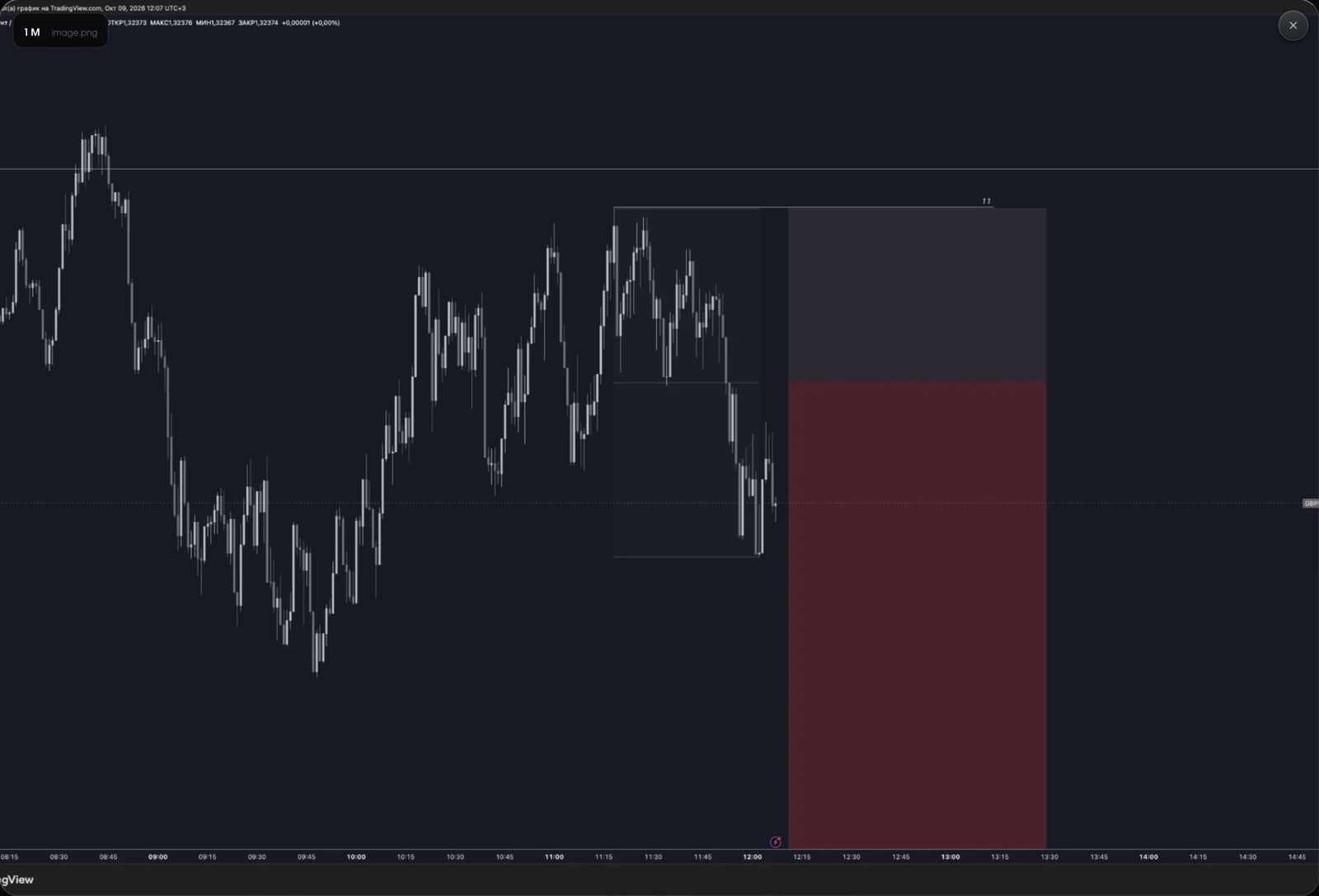
Compare the supported condition and action
Check the actual action against the known earlier rule. If evidence supports following it, retain that assessment. If it supports a departure, describe the specific step. If the condition or action is unknown, leave the assessment open.
A later profit or loss does not resolve those gaps. Nor does a better-looking alternative point on the chart establish that you could have executed there. Keep the real P&L and risk basis unchanged while considering a new hypothesis.
For an early-exit review, this means examining the prior exit condition rather than treating every later continuation as proof that closing was wrong. A permitted exception also belongs to the earlier rule if it was actually part of it.
Use later information to form a new question
Once the earlier account is preserved, examine the final overview and your new annotations. Name what you learned later and what question it suggests. That can produce a clearer model definition or a recording task without rewriting the original intention.
If you choose to look only at an earlier view first, that is your own review procedure. It does not erase knowledge of the outcome you already have. A repeated reading of a familiar trade is not an unseen experiment because the later part of the image is out of view.
Keep any proposed rule or alternative explanation separate from a claim about model performance. One finished example can illustrate the idea; a defined set of relevant records is needed to describe how that idea appears in your history.
Save what the review can establish
Finish with the decision moment, earlier sources, supported action and later proposal clearly identified. Choose a small addition for future records, such as preserving the original condition or captioning an image at a management change.
Use the memory-versus-records review for the related task of comparing an impression with a defined history. Save what the sources support, what remains unknown and when you added new information.