

After time away, reopen one saved plan, rule or completed idea and choose a small question to check. You can resume journal work from that record without opening a new market position.
The procedure is about organizing records and conditions. It is not a test that decides whether you are ready to trade, and it does not prescribe a length of rest or a deadline for recovering losses.
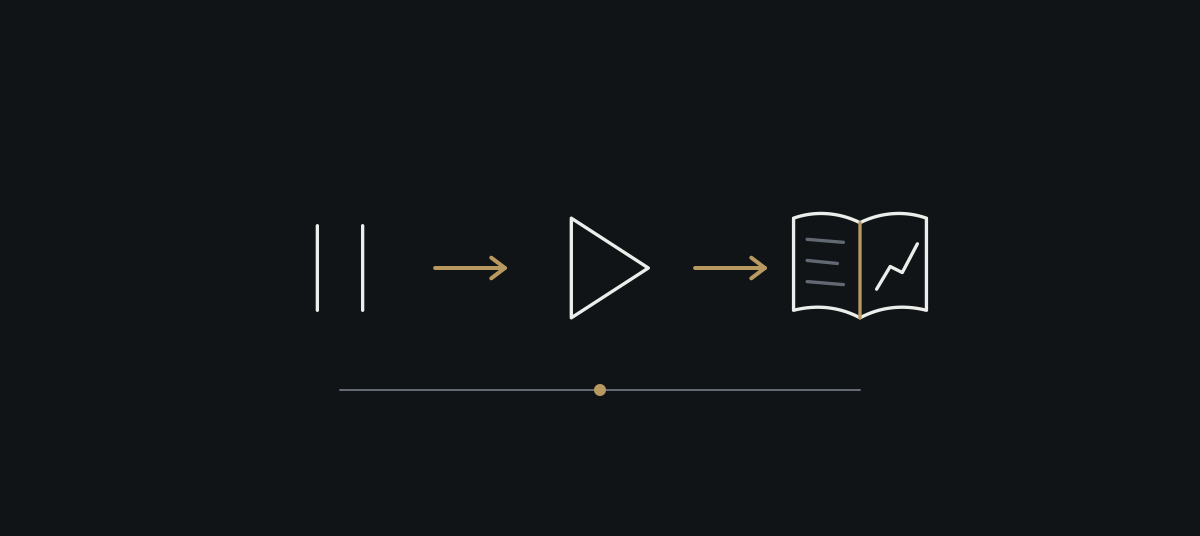
Find a reliable starting document
Open the material you were using before the break. Read the model definition, preparation checklist and the account context of a known entry. Check what was actually saved rather than trying to rebuild the whole history from memory.
Distinguish the earlier wording from changes you want to make now. The current editor does not supply a complete archive of every past version. Preserve relevant earlier text in your own review before replacing it with a new formulation.
If your immediate question concerns a particular run of losses, use the losing-streak review for that defined history. You can keep the return procedure smaller than a complete explanation of the entire period.
Check which conditions have changed
Read the account names, dates and relevant phases so that old records are interpreted in their own context. Then check whether the model, session definitions or catalogue labels still mean what you expect for future recording.
A changed account or revised rule needs an explicit note in your review. Do not make an old entry appear to have followed a condition that was only introduced during the break. A future procedure can differ while the past record retains its original basis.
List uncertainties before editing several records. Perhaps an opening balance needs a source check, a setup link is unclear or an image is missing. A short queue makes those tasks visible without requiring that you solve all of them before starting any useful work. Keep this queue separate from the earlier plan.
Choose one record and one question
Take a completed idea whose source is available. Confirm its actual result, then inspect one decision: the entry condition, a management change or the explanation at close. Stop the task at the question you selected rather than expanding every gap into a separate project.
A sample review note could read, “Today I am checking only whether this entry had the saved preparation condition. The timely image is available; the later management explanation is incomplete and remains a separate task.” Keep the scope of the task with the finding.
The same approach can start from an unexecuted plan. Leave it PLAN and review the written condition. You do not need to create an actual trade to make the journal session useful.
Rebuild a minimum recording procedure
Use the journal habit guide to choose a repeatable task that fits the work you actually do. A minimum can be a clear condition, a factual action and a source you can revisit. It does not need to be a long report.
A Workspace checklist can make the next session's task visible. You might include checking the account and date, opening the relevant model material and deciding what evidence needs to be saved. These are preparation items you write, not an automatic readiness assessment.
The session-checklist procedure explains the organization. Keep its role practical: it helps you see what was checked and what remains open. A completed list does not grant permission to trade or promise a particular outcome.
Record your current observations plainly
If you notice difficulty staying with the task or a wish to finish quickly, record it with its timing and the action you want to examine. The fatigue and workload guide helps describe that observation without assigning a diagnosis.
A later recollection should be labelled as later. You may also find that the procedure feels clear and the record needs little correction. Leave room for that finding instead of assuming that returning after a break must uncover a problem.
Keep process assessment separate from money. A difficult earlier result does not establish that every action was wrong, and a new completed review does not establish that a model will recover the earlier losses.
End with a visible next task
Save what you checked, what source supported it and what remains uncertain. Choose one next review task, such as verifying a missing account base or clarifying a future management condition. It should be possible to recognize when that task is finished.
Reopen the saved material once to confirm that the note and relevant links are where you expect. Leave that record as the starting point for your next review. Completing this task does not require an immediate return to the market.