

A missed trade can be worth reviewing without being given a fictional result. Save the condition you were considering, what you knew at the time and what did not happen. A later price move supplies new information about the chart, not a real execution for the account.
The journal can preserve the scenario as a plan or learning material. Keeping that role clear lets you examine the decision while leaving actual balances and performance tied to trades that were executed.
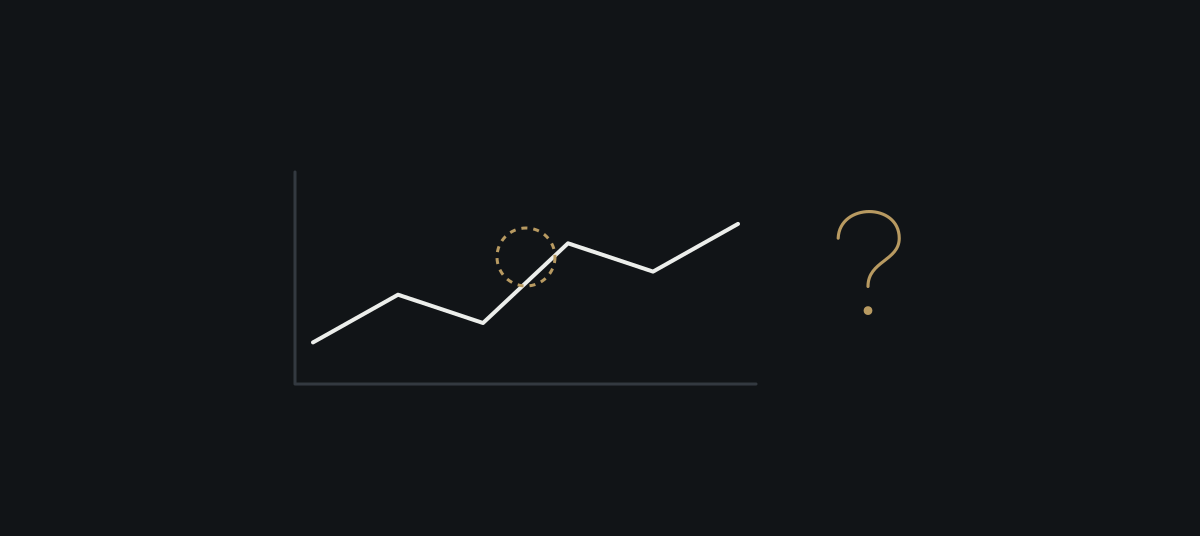
Choose a record that matches the event
If you saved an unexecuted idea in the Journal, leave its result as PLAN, represented by a blank Result. You can also use Workspace material or a board to keep a scenario with supporting text and images.
Plans, open positions and closed trades have different roles. PLAN does not enter closed P&L, Win Rate or the completed Calendar totals. A later chart should not turn an idea you never executed into TP.
Check that the wording agrees with the status. “No entry taken” is clearer than a description that discusses the imagined position as though it existed. Preserve any intended conditions as conditions rather than reporting them as fills.
Find what was known before the opportunity passed
Open the original plan, timely image or saved observation. Identify which condition you were watching and whether its state was actually recorded. A new annotation on the completed chart has a later origin.
A plan can also capture what would have made you reject the idea. That preserves the decision's boundaries without needing an imagined outcome. Label a rejection condition added during review as a new proposal.
A sample plan comment might say, “Waiting for the saved checklist condition. No entry taken. Image captured while observing.” A later addition can say, “Review: the condition appears to have occurred in the later source view; I did not record checking it at the time.” The two statements preserve different knowledge.
You can adapt the plan-versus-execution review to examine your observation procedure. Keep clear that there is no actual entry to assess in this case.
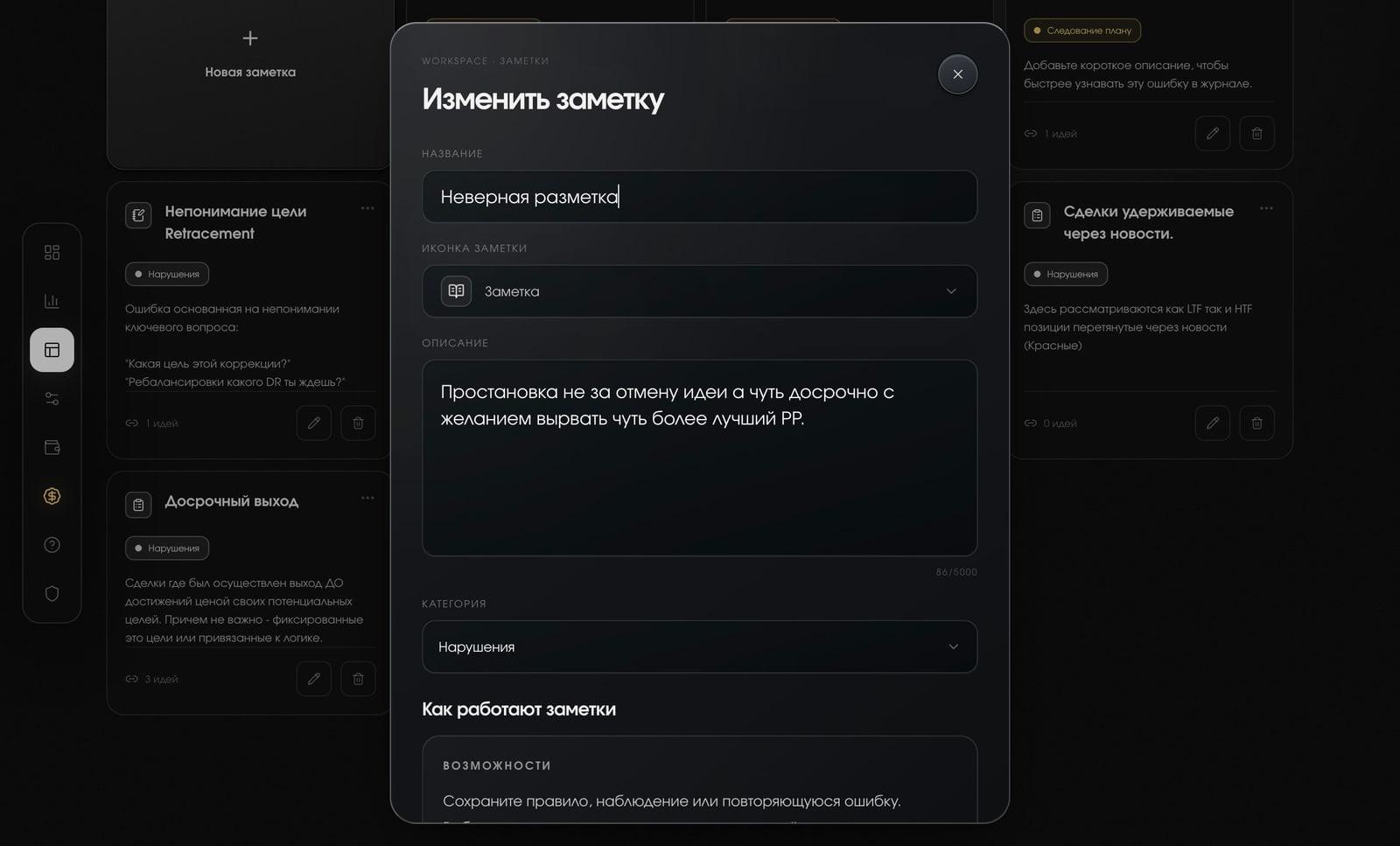
Describe the known reason or leave it open
If you wrote a reason at the time, keep it. You may have been following a waiting condition, working on another task or choosing not to act. The review should use the actual statement rather than the reason that best explains the later move.
A later recollection can also be recorded with its timing. If you do not know why the action did not happen, write that the reason is unknown. “I should have entered” does not supply a prior intention or a source for an execution.
A personally recorded fear of missing the move belongs in the FOMO review. The size of the move afterward does not establish that feeling, nor does it establish that avoiding the entry was a mistake.
Give the images their proper role
A timely image can show what was visible while you considered the idea. A later image can illustrate what you learned afterward. Caption both so a future reader knows which is which, especially when arrows or other marks were added during the review.
Santrade does not simulate the entry and exit you might have taken. A favourable later point is not a guaranteed fill, and the whole visible movement is not a realized profit. Keep any hypothetical arithmetic explicitly outside actual trading performance.
If the earlier evidence is missing, say what the later view can and cannot establish. It may support a new model question without supporting a verdict about the earlier decision.
Keep observations apart from closed assessments
A reusable Notes card can label the learning observation, and the plan can retain the event-specific circumstances. Notes usage can include linked plans as well as completed ideas, so its count is not automatically a count of closed process assessments.
Rule Compliance uses evaluated closed ideas. Attaching a card to a PLAN does not create a completed trade or demonstrate compliance across the financial history. Read the scope before comparing a Notes usage count with a closed metric.
Also keep hypothetical profit out of Money Log and the account balance. No money entered the account merely because a scenario would have looked favourable under one later-selected interpretation.
Save one improvement to the observation procedure
Ask what information would make a similar review clearer: a timely sentence about the waiting condition, an image when you checked it or a reason for deciding not to act. Choose the smallest recording task that addresses the gap you found.
The hindsight review helps separate a new insight from a condition you had beforehand. Keep the scenario as a plan with a learning question and no invented P&L. It creates no obligation to enter the next similar-looking setup.