

When two months look different, check what changed in the data, conditions, recorded procedure and money. These may change together, so examine each before explaining the difference.
A monthly review can use the Calendar, Dashboard, Deep Analytics and original entries. Keep each view's period and account scope explicit rather than expecting one control to make every screen represent the same history.
Compare periods with clear boundaries
Choose complete months or state why the selected periods are partial. Use the same intended accounts and read which account phases belong to each view. A changed account mix can alter both available capital and the composition of trades.
The Calendar month guide explains its inclusion modes and closed-record dates. Adjacent dates displayed to complete a calendar week should not silently become part of the monthly financial boundary.
Retain idea counts and distinguish linked executions from independent decisions. A larger month may contain more account rows without the same increase in separate trading ideas. Also note plans and open positions if your process question includes them.
Separate new events from corrected data
Check whether old records were updated after the earlier review. An import can complete a position, a corrected risk can make R available, and a category edit can change process assessments. A current summary of an old month can therefore differ without a new trade belonging to that month.
Record the nature of the correction before interpreting it as improvement or deterioration in trading. More complete coverage may reveal additional violations, while the actual actions and money remain unchanged.
If you kept a snapshot of the earlier view, use it as a static reference with its capture context. It is not a full backup or an automatic archive of the original records. The current underlying entries still need a source check.
Keep the percentage methods distinct
Read money, cash transfers and return bases separately. A trade's percentage uses its own Day Start; Dashboard period PnL uses its opening reference; Calendar links daily return factors using eligible capital. These methods need not give one identical percentage. Keep the funding date with any new opening base.
The guide to trading return and balance change explains the distinction. A deposit can raise the balance without becoming trading profit. NOW on the Dashboard describes the end of the selected period, including when that period is in the past.
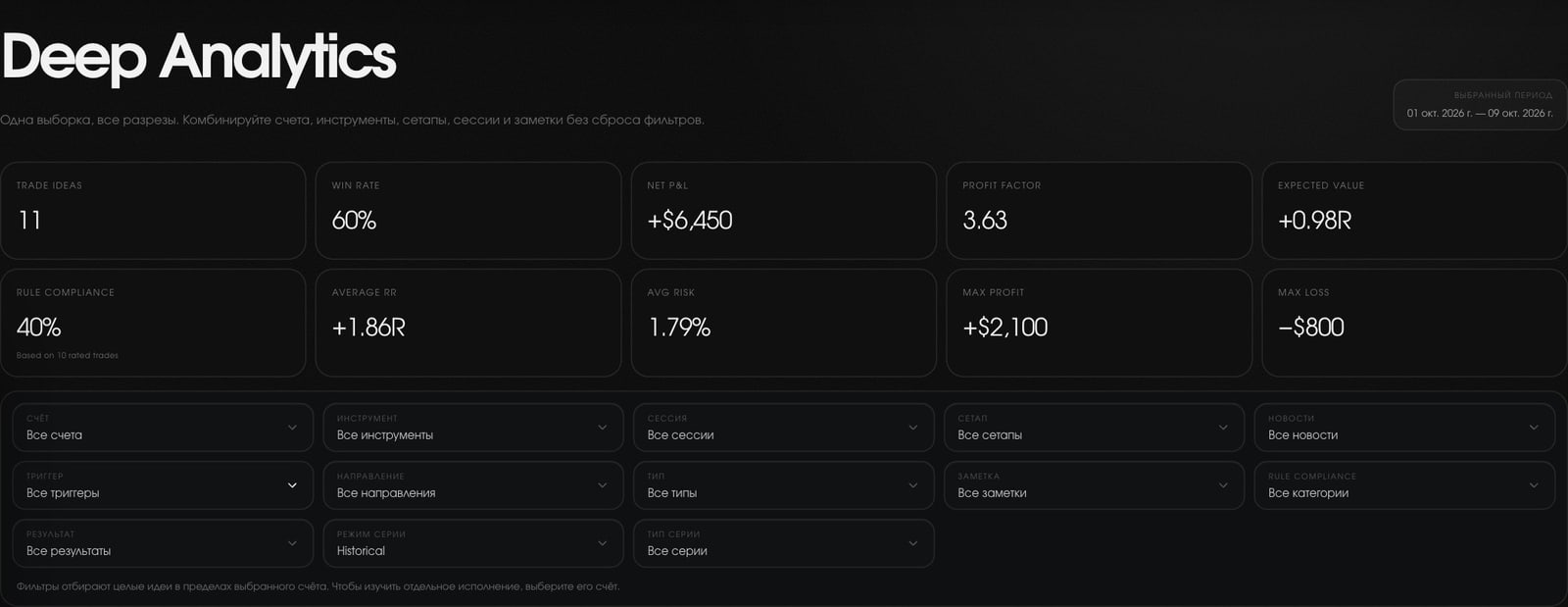
Check missing inputs too. Expected Value requires signed R for every included closed idea. Average RR uses known magnitudes and excludes BE. A newly available value can reflect better data rather than a newly better outcome.
Identify an actual procedure change
Find the rule or recording procedure saved before the relevant decisions. What changed, and from which point did you intend to apply it? A new instruction written during this review does not become the standard every earlier record was supposed to follow.
A sample monthly note could say, “The preparation document was clarified during the second month. Earlier entries keep the previous wording. The revised process was documented for some later cases; the rest remain unassessed.” Keep both the timing and coverage visible.
A profitable month does not prove the procedure change helped. Check the model, instrument, risk and account composition as well. The monetary result alone does not isolate which difference mattered.
Read cases with varied outcomes
Open supported examples from both monetary sides and ordinary smaller results. Apply the same known criterion across them. A clean image library can explain a model without representing the full sample used for performance review.
Retain unassessed and unlabelled records as limitations. If documentation improved during the month, compare like with like where possible and describe the remainder. Do not fill the older gaps from what the completed chart now appears to show.
The weekly review structure can help collect source-linked observations along the way. Monthly work can bring those findings together without changing every weekly impression into a universal explanation.
Save a bounded question for the next month
Record the dates, accounts, data corrections, changed conditions and the measures you compared. State which actions the source supports and which explanations remain open. Choose one next recording task that would address a real gap.
Use the saved comparison as the starting point for the next review. It may clarify the data basis or a rule, or show that the evidence remains insufficient. The review itself does not establish what caused a change or produce a profitable rule.