

Before assigning a Notes category, decide what the card is meant to say. It may record a recurring observation, confirm a known requirement was followed, or identify a supported departure. Those meanings need different evidence even when the category names look similar.
In Santrade, a category has a name, colour and analytical assessment type. The type determines its role in Rule Compliance. The label you write and the colour you choose do not determine that role automatically.
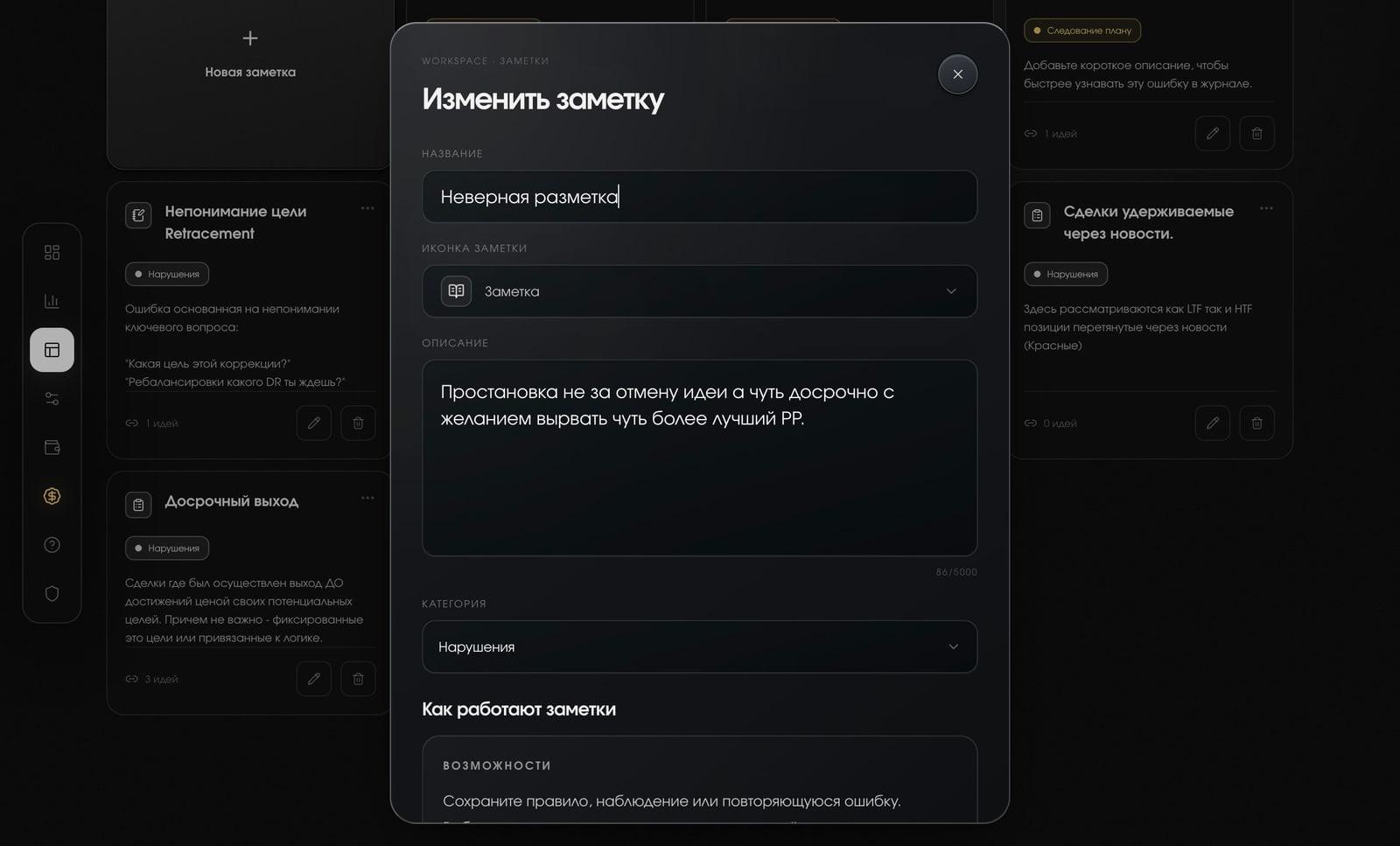
Separate observation from assessment
A personal observation might be, “I noticed urgency before entry.” That statement does not establish whether the action followed a rule. A compliant assessment needs a known earlier condition and supported action; a violation needs a supported departure from that condition.
A sample reusable definition could say, “Use this observation when a timely comment records urgency. Keep the specific thought and action in the trade description.” It gives the card a repeatable meaning without claiming every linked entry broke a rule.
Choose the neutral, no-assessment type for an observation that does not assess a rule. You can preserve the observation and its limits without assigning the trade a compliant or violation status.
Set the category's analytical type deliberately
Open the Notes category controls and check the assessment type as well as its name. The available meanings are no assessment, compliance and violation. A category called Mistakes can still be neutral if its type is neutral; a gold colour does not supply compliance.
Then check a card assigned to the category and a linked trade. Read whether the meaning agrees with the evidence in that record. The Rule Compliance and Coverage guide explains the denominators that will use the assessment.
The product applies the type you choose. It does not read the description and infer which of your rules the text proves or whether the original action met it.
Keep definitions reusable and events specific
Use the card description for the shared condition or observation. A recurring-mistake library is easier to maintain when one card names an observable action and explains the evidence needed to attach it.
The trade's own comment holds this event's circumstances: what was saved beforehand, what happened and which source supports the account. Do not put a private narrative about one entry into the shared card as though it described every link.
For example, a violation definition might require a confirmed entry before a mandatory check. The specific unfinished item and the timely image belong with the particular record. If that evidence is absent, the definition should not be treated as satisfied merely because the entry lost money.

Inspect existing links before changing a category
Changing the analytical type affects Notes in that category and can alter assessments of older linked trades. Check the existing links before treating the edit as a correction to one record.
Read several attached examples first. If you are changing the definition rather than correcting a mistake, preserve why and when in your own review material. A comparison between old and new summaries needs that context.
Deleting a category leaves the Notes without that category. Their assessment can therefore change, depending on other linked cards. Removing the category is different from erasing the underlying trades or proving that their actions no longer occurred.
Check overlapping cards and selection meaning
An idea can have several linked Notes. When compliant and violation types are both present, violation has priority in the overall classification. Neutral observations do not cancel either supported assessment. Explain the separate actions in the comment where a single overall status would hide detail.
A filter for a particular category selects the presence of that category. It does not necessarily mean every selected idea has that category's type as its final classification. Another linked violation can take priority over a compliant card.
The monetary review of assessed groups keeps that distinction visible. Overlapping Notes rows also need care: one idea can appear under more than one card without becoming several independent decisions.
Keep Notes categories distinct from the material library
Workspace categories organize documents and relevant trade-linking options. They do not assign the analytical type used by Notes for rule assessment. A setup document category and a violation category are different parts of the journal.
After saving the category change, reopen a known linked record and check its meaning. Use concrete review language to explain an uncertain action: state what the evidence supports and what remains open.