

Day Start is the balance used as an opening-day reference for a trade. Depending on that base, the same +$200 can represent a different percentage return and a different R result when risk is entered as a percentage.
Check the account and date before judging the number. A later balance, a deposit total or the opening balance of another account can look plausible while answering a different question from the one Day Start is meant to answer.
Identify where the number came from
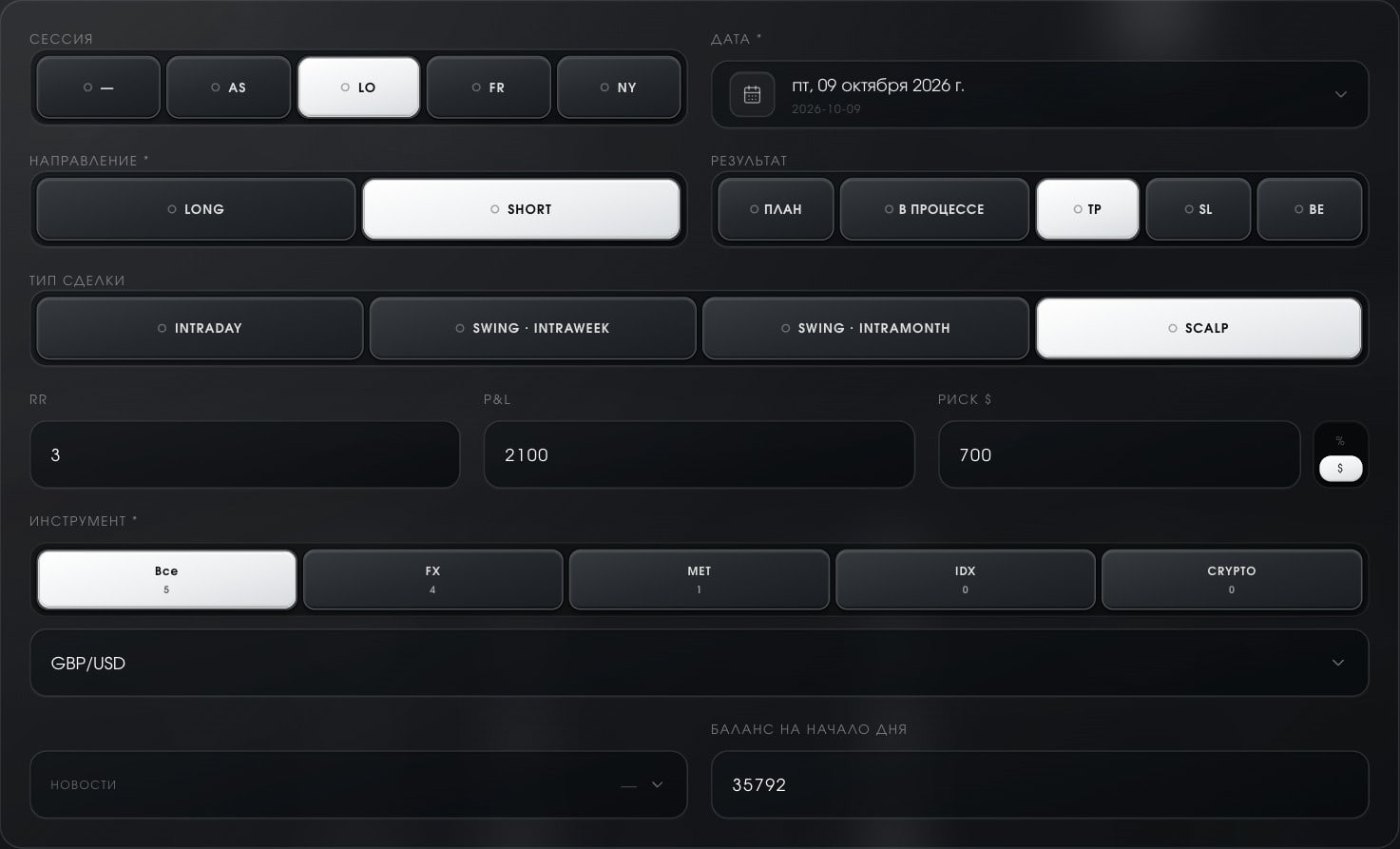
The trade form can suggest Day Start from the selected account and date. A positive value saved manually for a trade is retained as its reference. Where the value is missing, Santrade can derive a positive base from that account's recorded money history.
That history can include the opening funding, deposits, withdrawals and trading cash already recorded for the relevant dates. The journal is working from its own records. It does not verify the account against a live terminal balance while you type.
When adding an execution on another account, check its own opening base. The source account's number should not become the target account's reference merely because the shared trade context was copied. The value needs to describe where that execution actually belongs.
See what a different base changes
Suppose a closed trade has P&L of +$200 and recorded risk of 1%. With Day Start of $10,000, the cash risk is $100. The result is +2R and the trade's return is 2%. With Day Start of $20,000, the same 1% represents $200 risk, making the result +1R and the return 1%.
The money made has not changed in this example. The base changes the percentage return and the dollar amount implied by percentage risk. That is why it is worth checking the denominator before trying to explain a surprising R result through the trade itself.
If the recorded risk is a fixed $100 in both cases, +$200 remains +2R on either balance. The percentage return still changes. The guide to percentage and cash risk explains which conversions require Day Start.
Follow the date convention in the money history
The ledger uses a date-based convention: deposits are available at the opening of their day, while trading P&L and withdrawals are booked at closing. Imported execution cash can have its own actual dates, so an unfinished position may already have recorded cash movements.
Suppose a Personal account starts with $10,000, records +$200 closed trading P&L on the first day, then receives a $1,000 deposit on the next day. The second day's opening base is $11,200. The new deposit contributes to the available balance, but it is not a trading profit.
When a suggested base looks wrong, inspect the account's deposits and withdrawals alongside the dates of its trading cash. A correct total placed on the wrong date can still alter the base used for a particular record.
Separate a reference from a new deposit
Typing a Day Start value supplies a reference for a trade. It does not create a deposit in Money Log. Recording the same amount again as a new deposit would make a different claim about money entering the account.
Likewise, a later trade's opening snapshot does not simply reset the account's ongoing cash ledger to that number. Current cash follows the recorded funding and flows. Keep a manual reference, an actual transfer and a cash balance conceptually separate when checking a discrepancy.
The balance reconciliation guide covers the wider comparison with a terminal report. For this check, focus on whether the particular record has the right opening-day source, rather than changing its number until two screens happen to agree.
Investigate a missing base before supplying one
Start with the account identity, its opening date and the date of the trade. Then check whether the journal has the necessary opening funding or earlier history. A blank field can reflect missing information, not a balance of zero.
If you have a reliable opening-day figure, use it with a clear understanding of its source. Where no positive base can be established from the records, dependent metrics can remain unavailable. A zero entry is not a reliable substitute for a positive opening reference.
Also check the risk mode. An amount-based risk can remain known without deriving it from a percentage, while a percentage-based cash risk needs that positive base. Check these dependencies when one metric is available and another is not.
Keep this trade's percentage apart from period return
The trade's percentage uses its own Day Start. A month or other selected period has different boundaries and can contain deposits, withdrawals and many opening-day balances. Adding individual trade percentages is not automatically the same calculation as the period's displayed return.
Use the explanation of return versus balance change for that separate question. For an individual record, confirm the account, day, source of its opening base and the risk unit used with it.