

Start a personal knowledge base with one learning question. Keep its source, write what you currently understand in your own words and identify the evidence that would help you check that understanding.
Workspace documents, Notes and Boards can serve different parts of this work. A document can hold an explanation, a Notes card a reusable observation, and a board a visual relationship. None automatically verifies the material you collect.
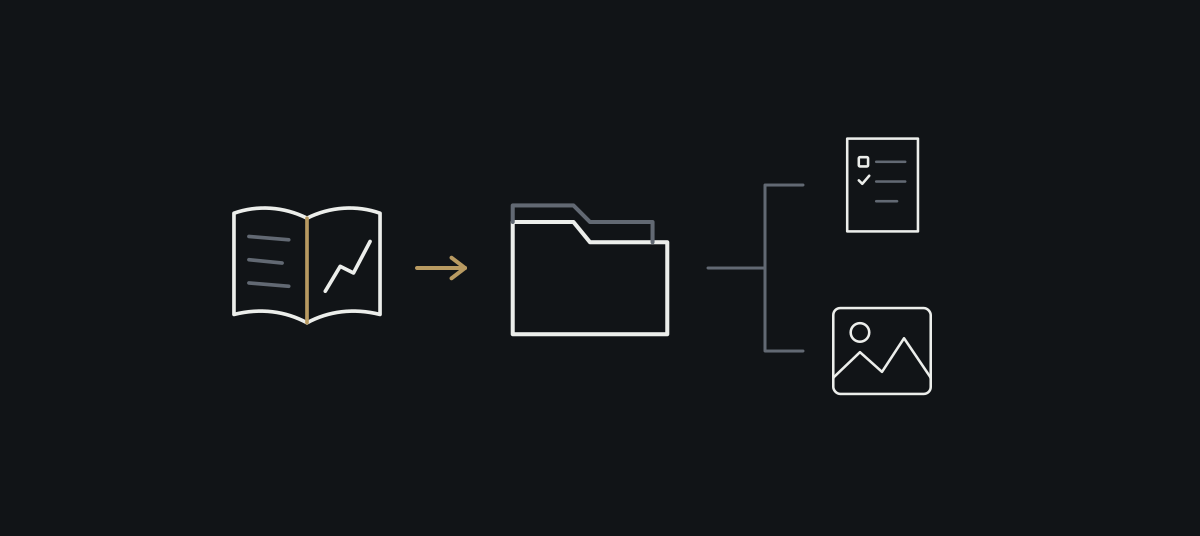
Give the material a specific purpose
Name the question the page should answer. For example, “What does this term mean in the model I am documenting, and which source defines it?” Keep the relevant excerpts with that question.
Identify whether the page is a source note, your explanation, an unresolved hypothesis or a working procedure. Those roles can sit near each other in the library while retaining different evidence standards. A new idea is not an established rule because it has a polished title.
The model-document guide covers material intended for actual use in preparation or review. Keep learning notes distinguishable from that working definition until you have decided what they can support.
Preserve provenance and your own explanation
Record the source name and a usable public link where appropriate, together with the part relevant to your question. Separate a short quotation, your paraphrase and your own proposed interpretation. Do not make copied material appear to be your original work.
A sample structure could be, “Source says… My current understanding… Question still open… Evidence I want to examine…” These are labels you write in the document, not a built-in research process or automatic fact-check report.
Use source material you are entitled to retain and share. A private reference collection and a public document have different audiences. Copying an image into a page does not by itself establish permission to publish the image or the surrounding text.
Build a library you can search
Choose a small set of useful categories, then use recognizable titles, tags, descriptions and favourites. The goal is to find the page that answers the question, without requiring that you remember every item's location.
An imported page can be a starting source, but check its structure and images first. The Notion transfer guide explains a supported one-page operation rather than a permanently synchronized external library.
Keep the document's role visible when editing it. If a source note becomes a working model, preserve what changed and which parts remain uncertain. A category name does not automatically establish quality, authorship or a proven trading result.
Connect learning to practice carefully
Use internal reference cards where they help connect a material with another document or a relevant record. A real trade can illustrate how a term was used, while its comment and images retain the event-specific evidence.
A working playbook can hold model documents you intend to consult. A recurring-observation library can define actions you recognize across cases. These structures organize different questions rather than replacing each other.
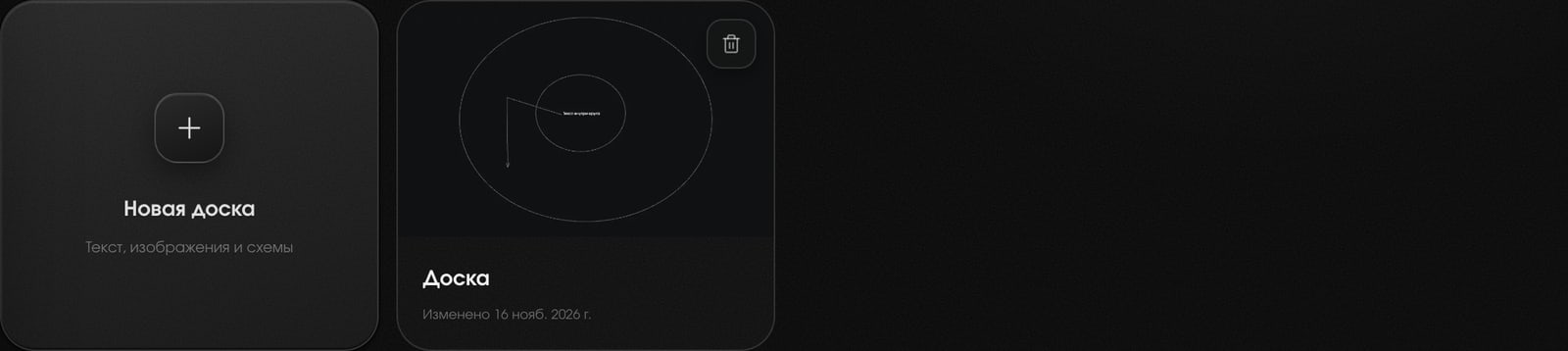
If you draw a relationship on a board, keep it a visual explanation. The scene does not execute a rule or collect matching market examples automatically. A diagram can identify an unknown link as clearly as a supported one.
Check what a shared page exposes
Private reference cards in a public Workspace document are replaced by a placeholder for the viewer. Sharing one material does not open the entire private library or let a recipient edit its linked records. Check the actual public view for the page you intend to share.
The document's saved text and images still need their own disclosure check. A placeholder protecting a private link does not remove account information already written into the paragraph or visible inside an attached picture.
Read-only access is not a recall mechanism for content someone already downloaded. Keep the source and intended audience in mind when enabling a public link, and distinguish that live saved view from a private note or a static file you have sent.
Revisit the question rather than the collection size
Open a page and try to explain its main condition without relying on the original source being fresh in memory. Can you identify which claim is supported, which explanation is yours and what remains a hypothesis? An unclear answer identifies the next useful edit.
Save a revised explanation with its origin and limits where they affect later records. Santrade stores these materials for you to revisit; it does not collect knowledge automatically, provide courses or guarantee understanding.